
June 13 — August 1, 2026


Caterpillar House
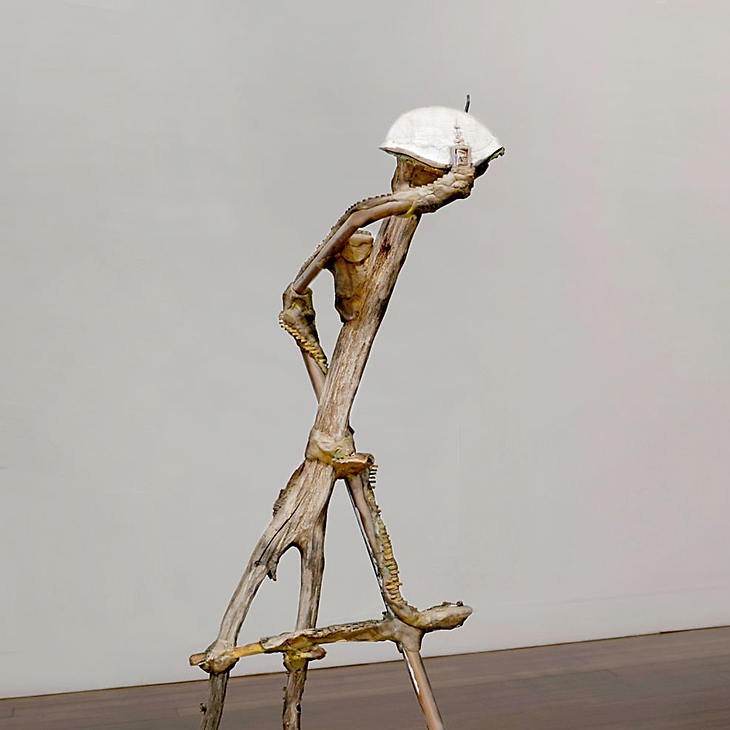
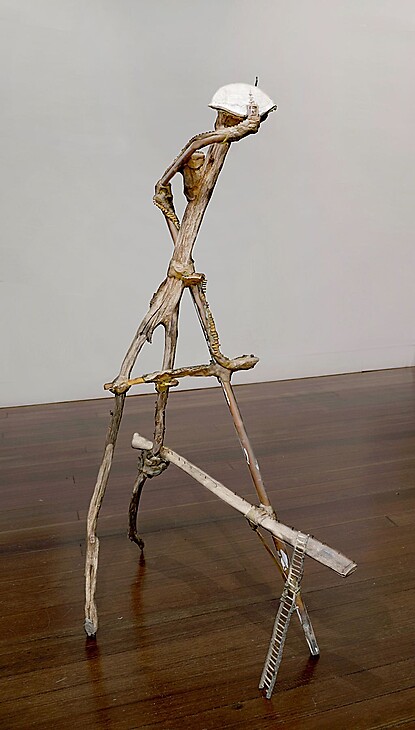
Jeff Gibbons, an artist who works across sculpture, painting, video, writing, and music, puts natural finds he’s collected in Provincetown, MA to magical use in Caterpillar House (2024). The sculpture’s starting point was a box turtle shell he encountered on a walk in the woods. A missing piece in the sun-bleached shell struck him as the doorway to a tiny home. Now the shell perches at the peak of a mountain of sorts, lined with a winding stairway and made from fallen branches and an ax handle Gibbons discovered in a dumpster. Peer through the window in the shell, and you’ll see a miniature room housing a wood stove, a bookshelf, a rug, a lamp, a coffee cup, and a lone inhabitant: a monarch butterfly. The room could be a setting from a storybook, but this tale takes a dark turn. Gibbons imagined a caterpillar crawling up the stairs to take
shelter in the shell, a place of safety and comfort. Now the creature has transformed and grown too large for its home. We’re glimpsing the monarch at a moment of decision: if it stays, its sanctuary will become a prison. The work is whimsical until it isn’t, and the LED light that shines from the tiny window is not a warm glow but a cold blue light, like the light of a
doomscrolling screen during a dark night of the soul. Some butterflies are known to drink the tears of turtles, thirsty for salt. Gibbons found a toy butterfly under a bed in a rental after the death of a dear friend. After he arrived in Provincetown, a butterfly was born from a chrysalis hanging in a new friend’s doorway, and Gibbons found his shell dweller after wandering into a shop selling taxidermied butterflies. Reality rhymes like that sometimes. Gibbons has transmuted small snatches of life—biographic material, tangible materials found by chance but collected with intention—into something potent and poignant.
-Jacqueline Houton, Boston Art Review, February 2024